Repair a Leaning Brick Column the Right Way
Updated: Oct 13
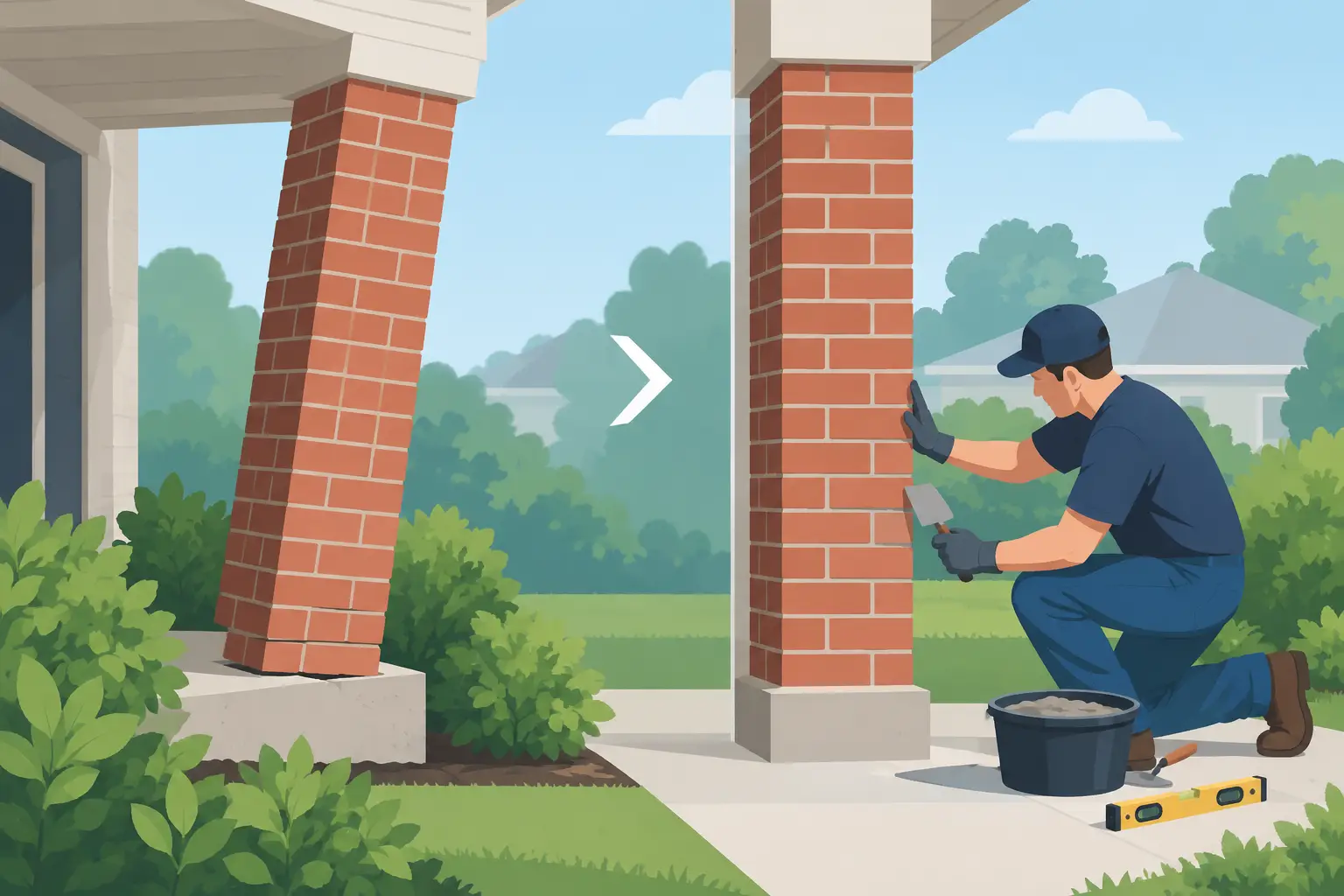
A brick column that has started to lean is not simply an appearance problem. Whether it supports a porch roof, marks a driveway, frames an entry, or stands beside exterior steps, movement means something beneath or inside the masonry has changed. To repair a leaning brick column correctly, the cause must be identified before new mortar or replacement bricks are installed.
A column may look solid from the street while its footing is settling, its core is deteriorating, or water is working through failed mortar joints. Waiting can turn a manageable repair into a partial rebuild, damage adjacent masonry, or create a real safety concern around an entrance, patio, or vehicle area.
Why Brick Columns Start Leaning
Brick is durable, but a brick column is only as dependable as the footing, drainage, mortar, and structure supporting it. In South Carolina, changing soil moisture, heavy rain, and years of water exposure can all affect masonry foundations and joints.
Settlement is one of the most common reasons a column leans. If the footing was undersized, poorly compacted, or built on soil that has shifted over time, one side can drop lower than the other. The movement may happen gradually, but once a column is out of plumb, gravity continues putting pressure in the wrong direction.
Water is another frequent cause. Runoff from a roof, clogged gutters, poor grading, or a nearby downspout can wash soil away from the base. Water can also enter open mortar joints, freeze during cold weather, and weaken the brick face or joints over repeated seasons. A column next to a driveway can be affected by surface water that is easy to overlook.
Some columns fail because of the way they were built. Decorative columns are sometimes constructed without an adequate concrete footing, proper reinforcement, or a sound connection to the structure they support. If a porch column carries a roof load, the repair becomes more urgent. The roof, beam, or porch framing may need temporary support before masonry work begins.
Vehicle contact can also cause delayed problems. A small bump from a car, lawn equipment, or delivery vehicle may crack mortar and shift a few courses of brick. Months later, the column begins to lean as moisture gets into the damaged area.
Signs a Leaning Brick Column Needs Prompt Attention
A slight tilt is enough reason to schedule a professional evaluation. Masonry does not normally straighten itself, and surface patching will not correct a movement problem below the brick.
Watch for widening or stair-step cracks in the mortar joints, loose or spalled brick, gaps where the column meets a porch or wall, crumbling mortar near the base, and a footing that appears cracked or exposed. A column that wobbles when touched, has separated from the structure, or is visibly leaning more than before should be treated as a safety issue.
Use extra caution when the column supports a roof, railing, gate, mailbox structure, or overhead masonry. Do not brace it with loose lumber and assume the issue is handled. Avoid leaning ladders against it, parking near it, or placing more weight on a damaged porch until the condition has been assessed.
How Professionals Repair a Leaning Brick Column
The right repair depends on why the column moved and whether the brick can be safely reused. A careful inspection should look at the column from top to bottom, including the mortar joints, surrounding drainage, footing condition, connection points, and any load resting on top.
Rebuilding on a Proper Footing
When settlement or a failed base is the problem, the most dependable solution is often to take down the affected column and rebuild it on a properly sized concrete footing. Sound brick may be cleaned and reused when it matches the existing masonry and remains structurally solid. Damaged brick and weak mortar should be replaced rather than hidden behind a cosmetic patch.
The footing must be built for the column's size, height, location, and load. A freestanding mailbox column does not have the same requirements as a large porch column carrying roof weight. Once the base is stable, the column can be rebuilt plumb, with properly tooled mortar joints and a top design that sheds water instead of trapping it.
Repairing Localized Damage
If the footing is stable and only a limited section was disturbed, selective dismantling and rebuilding may be possible. This work can involve removing loose courses, correcting the alignment, replacing damaged units, and repointing joints around the repair area.
This approach makes sense only when the remaining masonry is stable. Repointing alone is not a cure for a column that is still moving. Fresh mortar applied over a shifting base will crack again, often quickly.
Correcting Water and Drainage Problems
A successful masonry repair includes solving the water issue that caused the damage. That may mean extending a downspout, correcting grading, improving drainage near the footing, repairing nearby mortar joints, or addressing a roof or flashing leak above the column.
The top of the column matters too. A cracked cap, open mortar joint, or poorly sloped top allows water into the brickwork. Replacing or repairing the cap helps protect the completed repair from future moisture damage.
Supporting a Load-Bearing Porch Column
A leaning column beneath a porch roof needs a more controlled repair plan. Before masonry is removed, the load above may need temporary support. The existing column can then be rebuilt to the correct height and alignment without allowing the roof framing to shift.
This is not the place for a quick weekend patch. Proper support, footing preparation, brick layout, and mortar work protect both the porch and the people using it.
Why Surface Patches Usually Fail
It is tempting to fill cracks with mortar, push a loose brick back into place, or add a layer of concrete around the base. These repairs may improve the appearance for a short time, but they do not stop settlement, water erosion, or structural movement.
A thick mortar patch can also trap moisture against the brick. Mismatched repair mortar may be harder than the original masonry, which can contribute to brick damage over time. Good masonry work starts with a stable base and uses materials appropriate for the existing brick and joint condition.
For a small decorative feature, a full rebuild may be more cost-effective than repeated patching. For a historic or highly visible column, careful dismantling and reuse of original brick may be worth the additional labor. The best option depends on the condition of the materials, the column's purpose, and what is happening below grade.
What to Expect From a Professional Masonry Estimate
A clear estimate should explain whether the work involves repointing, partial reconstruction, full demolition and rebuilding, new footing work, drainage correction, or temporary structural support. Homeowners should understand what is included before the first brick is removed.
At Coles Chimney and Brick Repair LLC, the goal is to explain the condition plainly, recommend the repair that will hold up, and keep the job moving on schedule. With more than 30 years of masonry experience, the work is approached with the same attention to safety and detail used on chimney repairs, brick steps, stonework, and concrete restoration.
Ask how the surrounding area will be protected, whether reusable brick can be saved, how water will be directed away from the repair, and what finish will be used on the mortar joints. These details affect both the final appearance and the long-term performance of the column.
Do Not Wait for a Lean to Become a Collapse
A leaning brick column rarely becomes safer with time. Early repair may allow more of the original brick to be preserved and can prevent damage to a porch, railing, driveway, or roof support. If you see cracks, separation, or movement, keep people clear of the area and have a qualified masonry contractor inspect the column before the next hard rain or storm puts more stress on it.


Comments