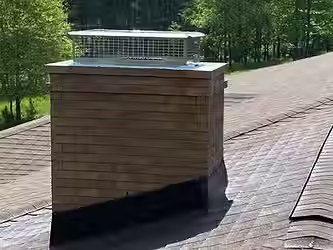
Stainless Steel Chase Cover for Lasting Leak Repair
Updated: Oct 13
Water entering at the top of a chimney chase rarely stays at the top. It can soak insulation, rust the firebox, stain ceilings, damage framing, and create repair costs that grow every time it rains. A properly fitted stainless steel chase cover is one of the most effective ways to stop that problem on a prefabricated or factory-built chimney.
Many homeowners first notice a chimney leak as a brown ceiling stain, damp drywall near the fireplace, peeling paint, or a musty odor. By then, the old chase cover may already be rusted through or pulling away at the corners. Replacing it with a quality stainless cover protects the entire chimney system from the weather and gives the top of the chase a clean, finished appearance.
What a Stainless Steel Chase Cover Does
A chase cover is the metal lid installed across the top of a wood-framed chimney chase. It is common on factory-built fireplaces, where the chimney pipe runs inside a siding, stucco, or wood enclosure. The cover sheds rainwater away from the chase while leaving properly sized openings for the flue pipe or pipes.
It is not the same thing as a chimney crown. A crown is a cement-based cap found on many masonry chimneys. A chase cover is fabricated metal, usually installed on a chimney chase with a raised edge and a slight slope to direct water away.
When the cover fails, water has a direct path into the chase. That moisture can affect more than the outside trim. It can corrode metal components, rot wood framing, damage the chimney pipe, and work its way down into the home. A leak that appears small on the ceiling can point to significant damage above the roofline.
Why Stainless Steel Is the Better Long-Term Choice
Many original chase covers are made from thin galvanized steel. Galvanized covers are less expensive upfront, but they can rust over time, especially in the rain, humidity, and changing temperatures common across South Carolina. Once rust begins at a seam, around a pipe opening, or along the outer edge, the cover can fail quickly.
A stainless steel chase cover costs more than a basic galvanized replacement, but it is usually the better value for homeowners who want a durable repair. Stainless steel resists rust, holds up well against regular weather exposure, and does not need to be painted to remain protected. It is a practical material for a component that sits on the roof year after year.
The quality of the metal is only part of the job. A good cover should be custom measured for the chase, formed with a slope for drainage, and built with raised collars around the flue openings. Those collars help keep water from running into the gaps around the chimney pipe. A flat, poorly fitted cover may look acceptable from the ground while still allowing water underneath it.
Signs Your Chase Cover May Need Replacement
A chase cover can be damaged long before a homeowner sees water indoors. An annual chimney inspection is the safest way to catch trouble early, but several warning signs deserve attention:
Rust streaks running down the outside of the chase or siding
Visible rust, holes, warped edges, or loose corners at the top of the chimney
Water stains on ceilings or walls near the fireplace
A damp, musty smell around the firebox or chase
Dripping water, rust flakes, or moisture inside the fireplace after rain
Sometimes the problem is not the entire cover. A loose storm collar, failed seal around a flue pipe, or damaged chimney cap may be contributing to the leak. That is why the top of the chimney should be inspected as a complete system rather than sealed with caulk and left alone. Caulk can be part of a proper repair, but it will not fix thin rusted metal or a cover that was incorrectly installed.
Proper Installation Matters as Much as the Material
A stainless steel chase cover should be measured after the chimney is inspected, not guessed from a standard size. Chimney chases are not always square, and the flue location, number of pipes, and roof access all affect the final fit. A custom cover should extend over the chase walls enough to direct water away without creating openings where wind-driven rain can enter.
During installation, the existing cover is removed so the contractor can inspect the condition beneath it. If the chase framing, sheathing, siding, pipe flashing, or termination cap has water damage, those issues need to be addressed before the new cover goes on. Covering damaged materials without correcting the cause can leave a homeowner with a new top and the same hidden problem.
The replacement cover is then secured properly, with sealed fasteners and correctly fitted collars around each flue. Chimney caps and termination components also need to remain compatible with the fireplace system. Factory-built fireplaces are engineered systems, so the chimney pipe, cap, clearances, and listed components should never be altered carelessly just to make a cover fit.
Chase Cover Repairs and Related Chimney Problems
Water damage at the top of a chase often appears alongside other chimney concerns. Rust on a chase cover may come with damaged siding, soft trim, deteriorated flashing, cracked crown coats on adjacent masonry, or a loose cap. In some cases, an aging fireplace insert or chimney liner also needs evaluation for safety and proper operation.
This is where a full inspection saves time and money. The goal is not simply to replace one piece of metal. The goal is to find the route water is taking and make sure the chimney is safe, stable, and protected from the next storm.
For a masonry chimney, the solution may involve crown repair, repointing, flashing repair, or waterproofing rather than a chase cover. For a factory-built chimney, a stainless cover may be the right answer, but the chimney pipe and termination cap should still be checked. The correct repair depends on the type of chimney and the actual condition of the materials.
How to Protect a New Chase Cover
Once installed, a stainless steel cover requires little maintenance, but it should not be forgotten. Have the chimney inspected regularly, particularly before heavy fireplace use. Look for storm damage, fallen limbs, loose caps, and sealant failure around the flue collars.
Keep an eye on the area inside the home as well. A new ceiling stain, a change in odor, or water in the firebox after a hard rain deserves a prompt call. Addressing a small issue early is far less expensive than replacing rotten framing or repairing interior water damage later.
Homeowners should also avoid climbing onto the roof to inspect or seal a chase cover themselves. Roof slopes, wet surfaces, and chimney components create real fall and safety hazards. A trained chimney professional can inspect the cover, cap, flashing, and surrounding roof area without risking damage to the system or injury.
Get the Right Fit for Your Chimney
A chase cover is a small part of the roofline, but it carries a major responsibility. If it rusts through or fails at the seams, water can damage the chimney from the top down. Installing a custom-fit stainless steel chase cover is a straightforward way to protect a factory-built chimney, prevent repeat leaks, and avoid larger repairs.
Coles Chimney and Brick Repair LLC provides clear recommendations after inspecting the condition of the chase, cover, flue openings, and surrounding materials. If you have rust streaks, water stains, or an aging galvanized cover, getting the problem checked before the next hard rain is a practical place to start.


Comments