Tuckpointing Versus Repointing Differences
Updated: Oct 13
A chimney can look like it needs a few cosmetic touch-ups when the real issue is failing mortar that is allowing water into the structure. Understanding tuckpointing versus repointing differences helps homeowners make the right repair decision before loose brick, leaks, or an unstable chimney create a larger and more expensive problem.
Both services involve mortar joints between bricks, but they serve different purposes. Repointing is primarily a repair process that restores deteriorated mortar. Tuckpointing is a detailed finish technique that can improve the appearance of brickwork, often while repointing is being completed. The right choice depends on the condition of the masonry, the age of the home, and whether structural repair or historic appearance is the main concern.
What Is Brick Repointing?
Repointing means removing old, damaged mortar from masonry joints and installing new mortar. It is one of the most practical repairs for aging brick chimneys, exterior walls, steps, columns, and foundations.
Mortar does not last forever. South Carolina heat, rain, humidity, freezing temperatures, and repeated moisture exposure can cause joints to crack, erode, or separate from the brick. Chimneys are especially exposed because they take weather from every direction and may also have water problems caused by a damaged crown, flashing, cap, or chase cover.
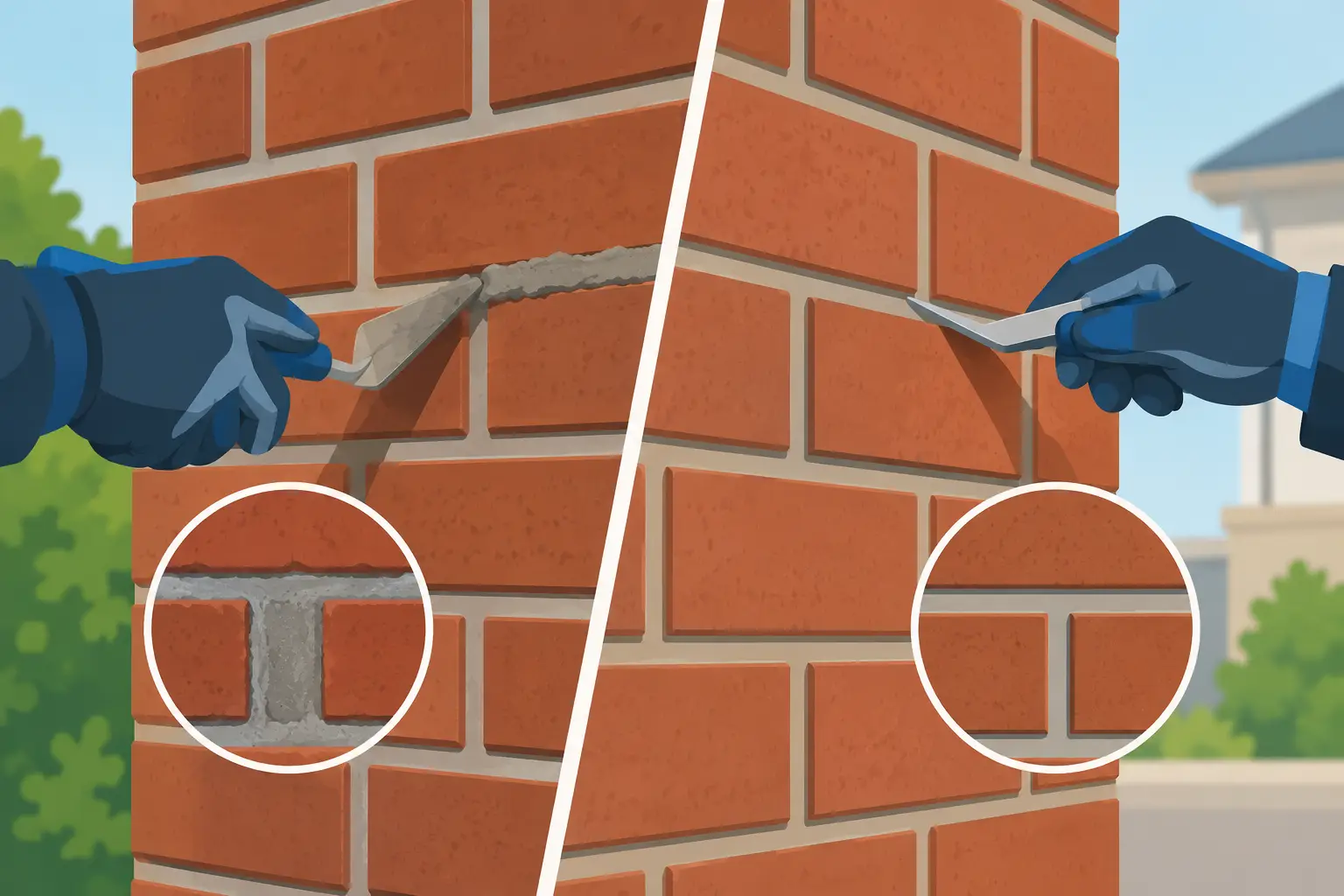
A proper repointing job starts with removing unsound mortar to the necessary depth without damaging the surrounding brick. The joints are cleaned, prepared, and refilled with a mortar selected to work with the existing masonry. Once the mortar is properly finished and cured, it helps restore the wall or chimney's ability to resist water and hold the brickwork together.
Repointing is not simply spreading new mortar over the face of a crack. That quick patch may look better for a short time, but it often fails because the weak material underneath was never removed. Quality masonry repair addresses the joint itself, not just its surface.
What Is Tuckpointing?
Tuckpointing is a more decorative masonry technique. Traditionally, it was used to make uneven or mismatched brickwork appear more uniform. A mason fills the mortar joint with a base mortar that closely matches the brick color, then adds a narrow, contrasting line of mortar through the center. From a distance, those fine lines can make joints appear straighter, narrower, and more precise than they really are.
The technique takes time, steady workmanship, and attention to detail. It is most often associated with historic homes, older commercial buildings, and masonry where the original appearance matters as much as the repair itself.
In everyday conversation, people sometimes use “tuckpointing” to describe any mortar repair. That is understandable, but the terms are not always interchangeable. A contractor may say they are tuckpointing a chimney when they mean they are removing failed mortar and replacing it. The best way to avoid confusion is to ask what work will actually be performed: Will deteriorated joints be removed and replaced? Will a decorative contrasting line be added? Will the new mortar be color-matched to the existing work?
Tuckpointing Versus Repointing Differences That Matter
The main difference is purpose. Repointing is done to restore the strength, weather resistance, and service life of masonry joints. Tuckpointing is done to create a refined visual effect, although it may be included as part of a repointing project.
Repointing is the service most homeowners need when mortar is crumbling, missing, cracked, or soft enough to scrape out by hand. It is often necessary on chimney stacks, brick steps, retaining walls, brick columns, and older exterior walls. The work can help stop water from reaching deeper into the masonry system, where it can contribute to loose brick, interior moisture damage, and structural movement.
Tuckpointing is more likely to be considered when the building has a historic look, very narrow joints, decorative brick patterns, or visible masonry that the homeowner wants to preserve carefully. It costs more in many cases because the finish work is more detailed. Not every wall or chimney needs that level of appearance work.
There is also a practical middle ground. A homeowner may need standard repointing for failed joints but request careful mortar color matching and clean joint finishing so the repair blends naturally with the existing brick. That approach provides the protection the masonry needs without paying for decorative tuckpointing where it is not necessary.
Why Mortar Selection Matters More Than Many Homeowners Realize
The replacement mortar must be compatible with the brick and the original mortar. This is especially important on older homes. Historic brick can be softer than modern brick, and an overly hard mortar can cause damage over time.
Mortar should generally be the sacrificial part of a brick wall. In other words, it should manage normal movement and weather exposure without forcing stress into the brick itself. If the mortar is too hard, moisture and expansion pressure may contribute to brick faces breaking apart, a condition often called spalling.
Color and texture also matter. A mismatched repair can stand out sharply against older brick, even if the work is structurally sound. An experienced mason considers the joint profile, mortar color, sand texture, brick condition, and exposure to weather before beginning the repair. That preparation produces a repair that looks right and performs as it should.
Signs Your Chimney or Brickwork May Need Repointing
Homeowners often notice the problem first as small gaps or sandy mortar around individual bricks. On a chimney, that deterioration should not be ignored. Water can work into open joints, freeze during cold weather, and loosen more material each season.
Watch for mortar that is cracked, missing, powdery, or recessed deeply behind the brick face. Loose bricks, white staining, damp spots near a fireplace, and pieces of mortar collecting below the chimney are also warning signs. If a chimney is leaning, separating from the home, or dropping brick, treat it as a safety concern rather than a cosmetic project.
Not every crack calls for full repointing. A small, isolated joint failure may be repairable with localized work. When damage appears across broad sections of a chimney or wall, more extensive repointing may be the better long-term value. The condition of the crown, flashing, chimney cap, and surrounding brick should be checked at the same time, because water entry is often the reason mortar failed early.
How the Repair Process Should Work
A dependable masonry repair begins with a close look at the full structure. For a chimney, that includes the mortar joints, brick condition, crown, flashing, cap, and any signs of leakage inside the home. Repairing joints without addressing the water source can leave the homeowner facing the same issue again.
Once the scope is clear, failed mortar is carefully removed from the affected joints. The mason cleans the joints, installs compatible new mortar, and finishes the surface to match the existing profile as closely as possible. Brick that has already cracked, loosened, or deteriorated may need replacement before the joint work is completed.
Timing matters during masonry work. Mortar needs suitable temperatures and proper curing conditions to develop strength. Rushing the work, using the wrong materials, or applying a thin surface patch can compromise the repair. A quality contractor should explain what needs to be repaired, why it is needed, and what the finished work will include before the job begins.
Choosing the Right Service for Your Property
If your concern is crumbling or missing mortar, water intrusion, loose bricks, or chimney stability, repointing is usually the starting point. If your brickwork is historically significant or you want the narrow, crisp visual lines associated with traditional masonry, tuckpointing may be worth considering.
For many homeowners, the best answer is not an either-or decision. The project may require structural repointing first, followed by careful finish work that respects the appearance of the home. The key is getting an honest assessment instead of treating every mortar issue as a cosmetic patch.
Coles Chimney and Brick Repair LLC approaches masonry repairs with that practical mindset: identify the cause, explain the needed work clearly, and complete the repair with attention to safety, appearance, and lasting value. If you see failing mortar around your chimney or brickwork, having it inspected early can protect the structure and give you more repair options before the damage spreads.


Comments